

The experiment that was supposed to work The experiment looked straightforward on paper. The protocol was well established, the reagents were fresh…
Early-Career Researcher profile: Catherine Rono

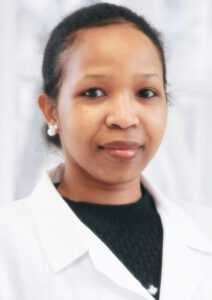
From time to time we will feature Early-Career Researchers and give them the opportunity to present themselves and their research. In this first spotlight we will meet Catherine Rono, a postdoctoral researcher in the Department of Immunology at the NCI-designated Roswell Park Comprehensive Cancer Center.
How did you first get interested in science and/or your field of research?
My interest in science began at an early age but became deeply personal when I watched my aunt battle ovarian cancer. Witnessing her pain and the limited treatment options available was traumatic, but it left a lasting imprint on me. This motivation guided my academic path, leading me to pursue research focused on understanding disease mechanisms and identifying strategies that could improve patient responses and outcomes.
Over time, this passion evolved into a commitment to cancer research, where scientific discovery has the power to translate directly into meaningful clinical impact. My goal is to contribute to advancements that can expand access to better therapies and bring hope to patients and families who face similar circumstances to my own.
Tell us about your favorite research project you are working on.
My research focuses on understanding how targeting metabolic pathways in immune cells can enhance antitumor immunity and improve responses to cancer immunotherapy.
My research bridges cancer immunology and immunometabolism, aiming to improve the limited efficacy of immune checkpoint inhibitors (ICIs) such as anti–PD-1 therapy. While anti–PD-1 work by boosting cancer-specific CD8⁺ T cell responses, they are currently effective in only a small number of cancers or patient subsets, including those with breast cancer. This highlights the need for new strategies that can overcome tumor-driven resistance and restore robust CD8⁺ T cell activity.
To address this challenge, my research harnesses the power of dendritic cells (DCs), the most ‘professional’ antigen-presenting cells critical for initiating and sustaining CD8⁺ T cell responses to enhance antitumor immunity. My approach focuses on targeting the nucleotide synthesis pathway in DCs to enhance their differentiation and maturation, thereby strengthening their ability to activate T cell responses.
To achieve this, I am “repurposing” an existing drug brequinar (BRQ), which is already being tested in clinical trials for other diseases. Because BRQ has established clinical momentum, successful results from my studies could accelerate its evaluation in breast cancer or other cancers where immunotherapies remain suboptimal.
What has been the most exciting part of your scientific career/journey so far?
Working in cancer research and contributing to new approaches that improve immunotherapy outcomes in triple-negative breast cancer (TNBC) has been the most exciting and fulfilling part of my scientific career. TNBC is an aggressive subtype that disproportionately affects Black and Hispanic women, who also experience poorer prognoses and limited therapeutic options.
By elucidating the metabolic and immune mechanisms underlying treatment resistance, my findings aim to identify new therapeutic strategies that not only advance cancer immunotherapy but also help close existing racial and ethnic disparities in breast cancer outcomes. I am also closely engaged with patient advocates to increase community involvement and ensure that community perspectives shape study design, strengthen trust, and support more equitable access to clinical trials.
Ultimately, my hope is to reduce disparities in cancer care, particularly for historically underrepresented and medically underserved populations.
If you could be a laboratory instrument, which one would you be and why?
I would be an incubator simply because I recognize that many before me fought to expand access and opportunities for underrepresented groups in science, and I honor their legacy by continuing that work. Like an incubator maintaining just the right conditions for growth, I strive to create spaces where individuals from diverse backgrounds can thrive. I do this through mentorship, outreach, and raising awareness of systemic inequities.
Whether supporting early-career researchers or advancing initiatives that promote equitable participation, I remain committed to nurturing the next generation of scientists. Like a good incubator, I believe that with the right environment sustained by both small actions and bold efforts, we can spark real, lasting change.
Attribution: Photo from National Cancer Institute. Creator: John Keith (photographer). NCI Visuals website; Https://visualsonline.cancer.gov/details.cfm?imageid=2589